Composite Decking in Stillwater, MN — A Surface Built for Freeze-Thaw Winters
Composite decking in Stillwater, MN gives a deck surface that holds flat and holds its color through winters that swing across the freeze point dozens of times a season. Capped composite is a wood-plastic core wrapped in a hard polymer shell, and the shell is what resists the moisture, the road salt, and the UV that gray out a wood deck. Installers fasten it over joists spaced to the board's span rating so the surface stays level. Call (651) 372-0781 to reach a deck builder in Stillwater.
What Composite Decking Covers
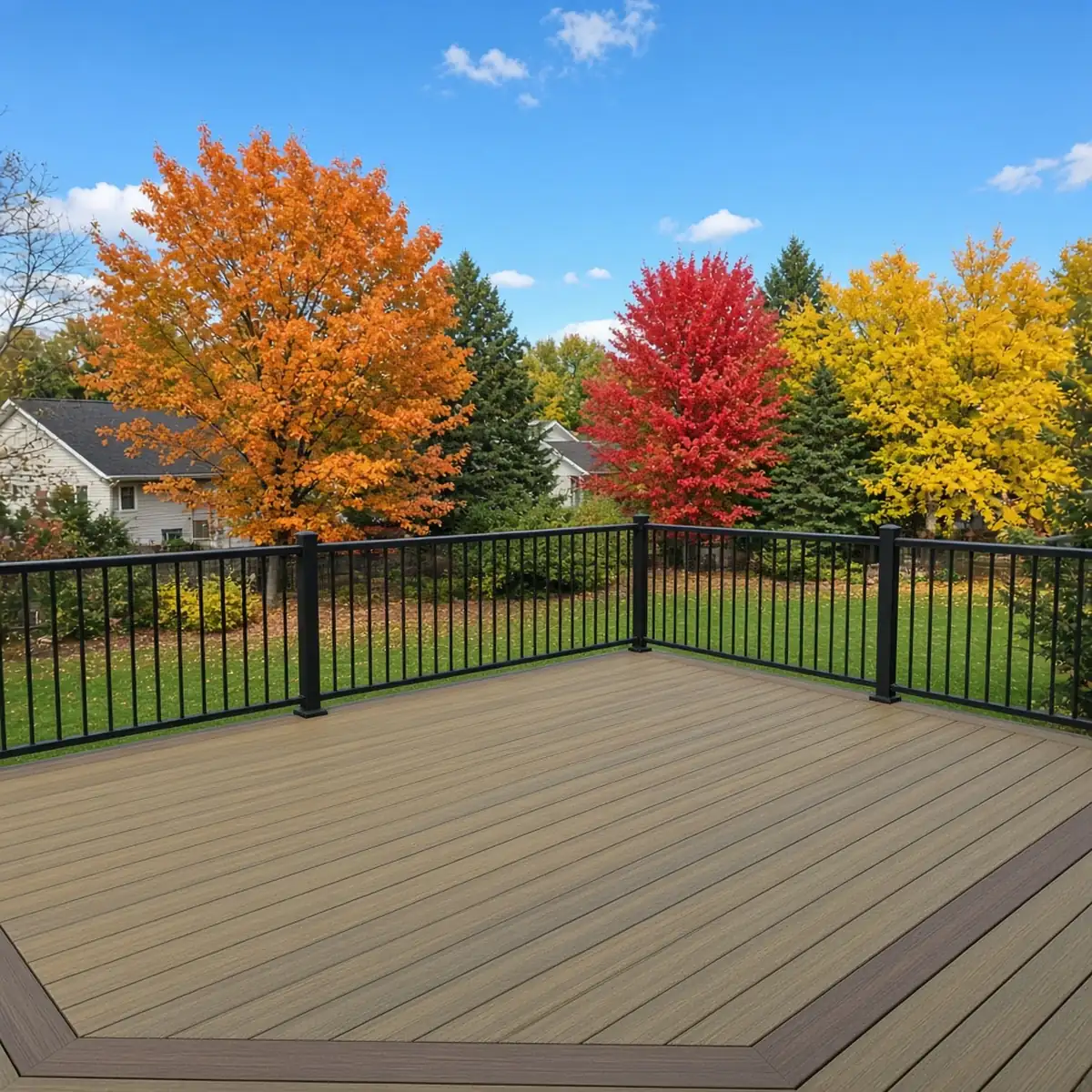
Composite decking covers the walking surface and the railings, installed over a pressure-treated frame. The boards are capped composite, a dense core sealed on all four sides or three sides by a polymer cap that blocks water from entering the board. The cap is why composite does not need the annual sanding and sealing that keeps a wood deck from splitting.
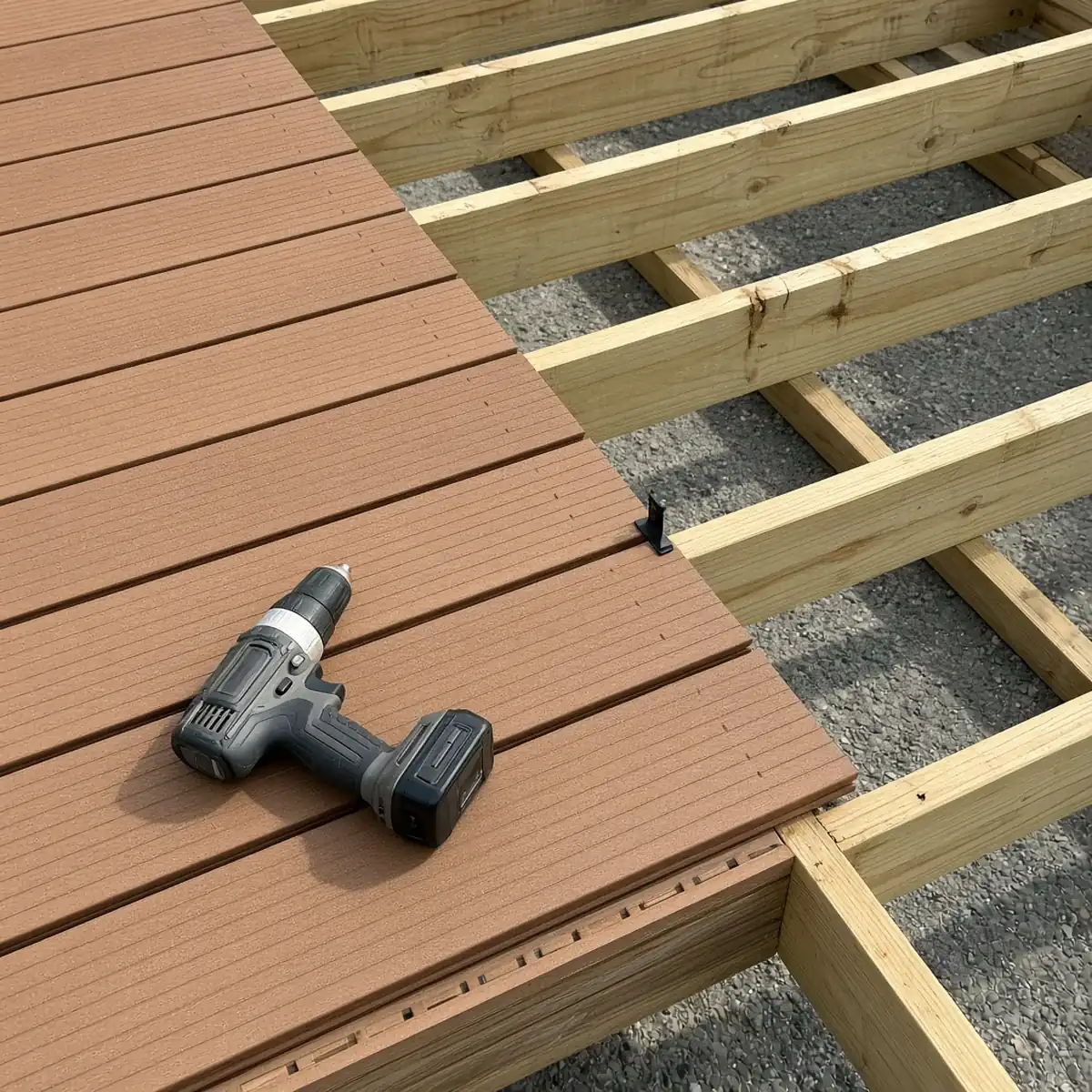
Joist spacing is part of the install. Composite flexes more than wood, so the joists sit closer together than a wood surface needs, and a diagonal pattern needs tighter spacing still. Hidden fasteners clip the boards to the joists so the surface has no exposed screw heads to back out in the cold. Call (651) 372-0781.
How Composite Decking Gets Installed
Composite decking gets installed over a frame built and inspected first. First, the deck frame is checked for joist spacing that matches the board's span rating, and joists are added where a wood layout left them too far apart. Second, the perimeter and any picture-frame border boards go down. Third, the field boards are set with hidden clips and spaced for drainage and heat expansion. Finally, the composite railings and fascia are fitted to cover the frame edges.
That spacing for expansion matters in Minnesota, where a board laid in summer heat and one laid in spring cold sit at different lengths. Call (651) 372-0781.
Why Composite Decking Fits Stillwater Homes
Composite decking fits Stillwater homes because the freeze-thaw cycle is hard on a wood surface. Water soaks into wood, freezes, expands, and splits the board, and the cycle repeats every time the temperature crosses the freeze point. Capped composite blocks that water at the shell, so the board does not take on the moisture that drives the splitting. On the owner-occupied homes that make up about three-quarters of Stillwater's housing, the lower upkeep is the draw.
Road salt and snowmelt that sit on a deck through a Minnesota winter stain and dry out wood. The polymer cap on composite rinses clean. A deck builder frames the structure to carry the surface either way. Call (651) 372-0781.
Work is performed by independent professionals.
What to Look for in a Composite Deck Installer
A composite deck installer worth hiring gets the frame and the spacing right. Look for an installer who:
- Checks joist spacing against the board's span rating and adds joists where needed.
- Uses hidden fasteners rated for the board, not surface screws.
- Spaces boards for drainage and for heat expansion across the Minnesota temperature swing.
- Caps the frame edges with matching fascia so no treated lumber shows.
- Builds composite railings to the 36-inch guard height with openings under four inches.
- Carries liability insurance and shows proof on request.
Those are the checks that keep a composite surface flat and draining. Call (651) 372-0781.
Frequently Asked Questions
Composite decking holds up well to Minnesota winters because the polymer cap blocks the water that drives freeze-thaw splitting in wood. The surface does not absorb melt or road salt, so it does not gray, crack, or need the yearly sealing a wood deck needs in this climate. The boards do expand and contract across the temperature swing, which is why installers space them for movement. A capped board is built for exactly this kind of winter. Call (651) 372-0781.
No. Composite decking does not need sealing, staining, or sanding, because the polymer cap that seals the board already blocks moisture and UV. Upkeep is washing the surface to clear dirt, pollen, and snowmelt residue. That is the main difference from a wood deck, which needs refinishing every few seasons in Minnesota to keep from splitting. The cap does the job a finish does on wood.
Joists under composite decking sit closer together than under a wood surface because composite flexes more under load. A straight board layout and a diagonal layout call for different spacing, and the board maker publishes a span rating for each. An installer checks an existing frame against that rating and sister in extra joists where a wood-era layout left gaps. Correct spacing is what keeps the finished surface from feeling soft. Call (651) 372-0781.
Composite boards can go over an existing frame only when the frame is sound and the joist spacing matches the board's span rating. An installer inspects the footings, the ledger, and the joists first. A frame with frost-heaved footings or a loose ledger needs that fixed before any surface goes down, because a new surface on a failing frame is unsafe. On a sound frame with added joists, a composite resurface is a strong upgrade.
Capped composite decking is a board with a wood-plastic core wrapped in a hard polymer shell on the exposed sides. The cap is the part that resists moisture, stains, scratches, and fading, which earlier uncapped composites did not. For a Minnesota deck, the cap is what matters, because it keeps winter melt and salt out of the core. A deck builder installs capped board over a frame spaced for it. Call (651) 372-0781.
Call Now for Composite Decking in Stillwater, MN
Call (651) 372-0781 to reach a deck builder in Stillwater, MN for capped composite decking installed over a frame spaced for it. See custom deck building for a new frame and deck repair and restoration to check an existing one.